

Most first aid courses end with a multiple-choice test.
Participants sit down, tick a few boxes, and leave with a certificate.
But here’s the question that really matters:
Can they actually cope when it’s real?
Why Traditional First Aid Training Isn’t Enough
In a real emergency, there is no quiet classroom.
No invigilator.
No time to think through four possible answers.
Instead, there is:
- Noise, confusion, and competing priorities
- Stress and adrenaline affecting decision-making
- Casualties who don’t present “by the book”
- Bystanders, colleagues, or family members reacting unpredictably
A first aider’s performance in that moment depends not just on knowledge, but on confidence, composure, and decision-making under pressure.
These are not tested by a written exam.
What We Do Differently
At Lazarus Training, we use scenario-based training to bridge the gap between theory and reality.
Our courses are designed to test, challenge, and develop your first aiders in conditions that reflect the environments they actually work in.
This includes:
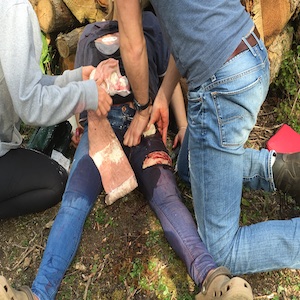
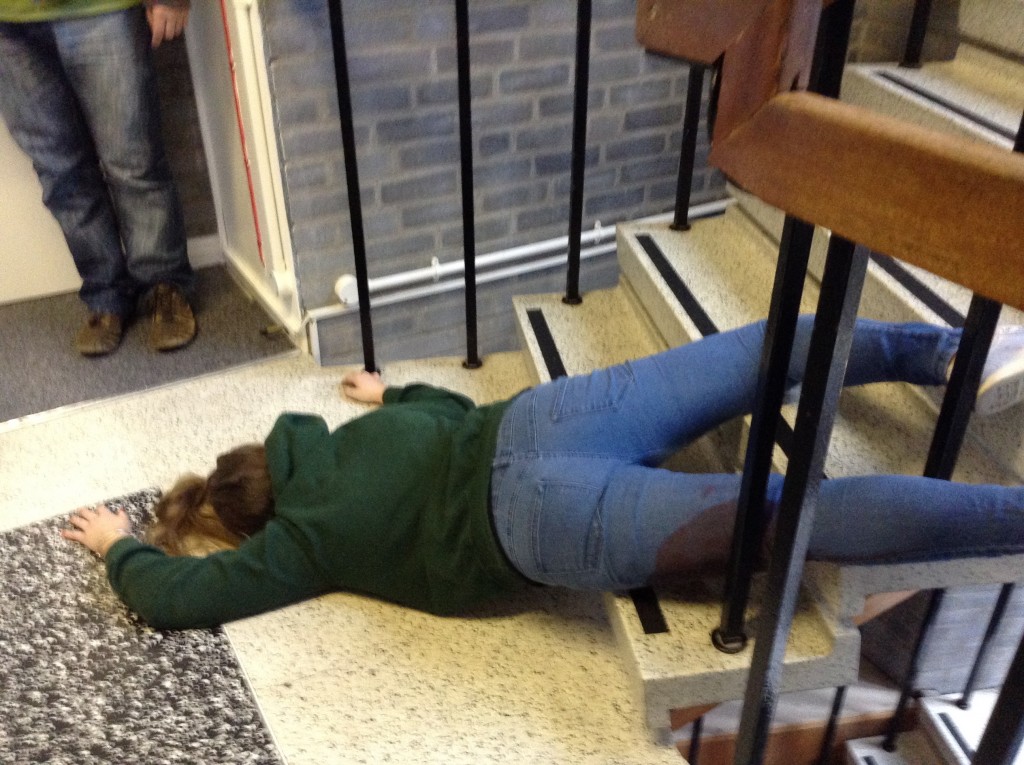
Realistic Scenarios
- Live role players acting as casualties and bystanders
- Dynamic, evolving situations — not scripted step-by-step drills
- Environments that reflect your workplace risks
![first person on scene training essex First Aid in Remote Locations Medical Assistance in Challenging Environments [MACE] Intermediate](https://www.lazarustraining.co.uk/wp-content/uploads/2017/04/Screen-Shot-2017-04-03-at-15.59.44.png)
Pressure and Decision-Making
- Time-critical situations requiring prioritisation
- Incomplete or conflicting information
- The need to lead, communicate, and act decisively
Human Factors
- Managing stress and cognitive overload
- Dealing with emotional responses — both their own and others’
- Maintaining situational awareness
From Knowledge to Capability
We’re not replacing core first-aid knowledge—we’re proving it works.
Our approach answers questions that a written test never can:
- Can your first aiders recognise what’s really happening?
- Can they make decisions under pressure?
- Can they take control of a chaotic situation?
- Can they actually deliver life-saving interventions when it counts?
This is the difference between having a certificate and being capable.
A Safe Way to Be Tested
Importantly, all scenarios are:
- Carefully controlled and risk-assessed
- Delivered by experienced trainers and role players
- Structured to challenge without overwhelming
Every scenario is followed by a structured debrief, where learning is reinforced, and performance is improved.
Participants leave not just with feedback, but with greater confidence and clarity about what they would do in real life.
Why This Matters for Employers
If you have a duty of care to your staff, customers, or the public, you need more than compliance.
You need confidence that your first aiders can perform when it matters most.
Scenario-based training gives you:
- Greater assurance of real-world capability
- Identification of gaps in skills or confidence
- Stronger team coordination in emergencies
- Training that reflects your actual risk profile
Test Your First Aiders — Before Reality Does
Emergencies are unpredictable. Training shouldn’t be.
Our scenario-based courses allow you to safely push your first aiders beyond the classroom — so you know they are ready.
Because in a real emergency, there is no second attempt.
Want to know more? Email us, or call on 0800 242 5210 [UK].
 Sacha Cooper